

The Sleep Society (TSS) support a series of long-term public awareness initiative, intended to highlight the importance of sleep across health, safety, and everyday life for both the individual and society as a whole.
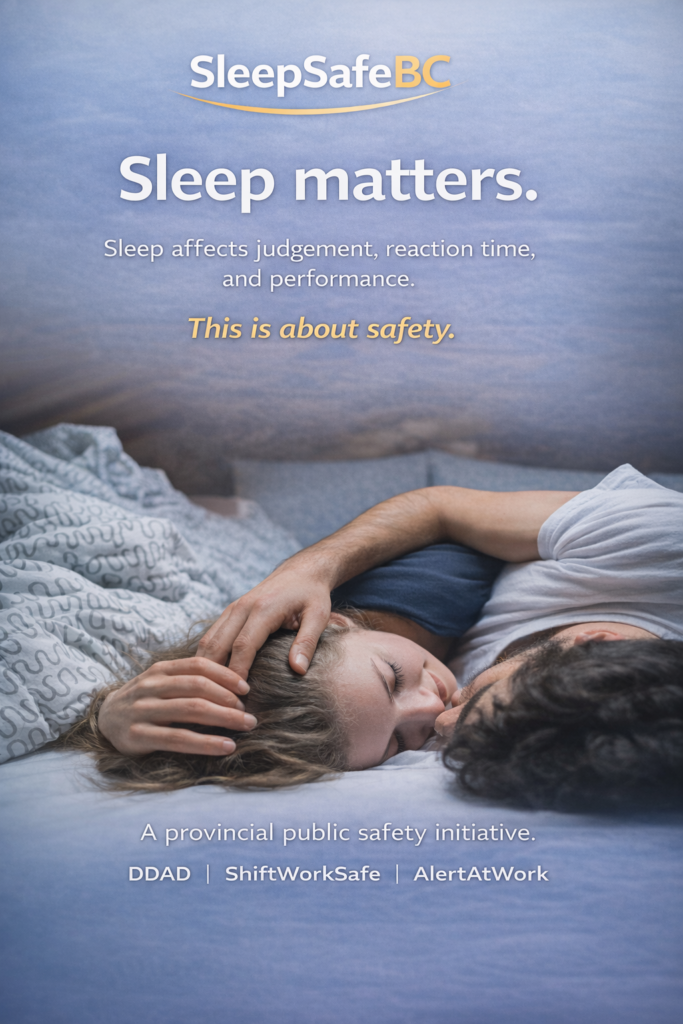
The idea of SleepSafeBC arose prior to the growth and consolidation of The Sleep Society. Through public education, professional engagement, and community initiatives, its aim is to increase awareness of sleep as a fundamental pillar of health and wellbeing.
It soon became clear that what could benefit British Columbia could also benefit Canada as a nation. It was therefore proposed that, from 2026, SleepSafe Canada would welcome all provinces and territories to share initiatives, educational resources, and information that may benefit their own communities or Canada as a whole.
It is hoped that, through collaboration and the sharing of knowledge, Canada can become a leading advocate for healthy sleep, recognizing the importance of sleep quality, quantity, and continuity in improving health, wellbeing, safety, and quality of life.
SleepSafeBC
At the beginning of each year a new initiative is proposed to build on the previous years program, although they may represent a different area of health and safety. The new initiative will be submitted to the World Sleep Society for their World Sleep Day in March/April time in order that it may act as a potential initiative or supportive foundation for the many countries involved. It will have a professional unveiling at the Sleep Kelowna meeting in April and appear in later presentations. The Sleep Society invites sponsors and partners in these health and safety programs. It is hope that these ideas may help other groups too and TSS remains open for such conversations. We thank everyone who has supported these ideas.
https://www.facebook.com/sleepsafebc/
______ 2024 ___________________________________________________________________________
BCHealthcare Bonds
BCHealthcare Bonds
Sleep is one of the most important, yet most underfunded opportunities in modern healthcare. It influences many of the most common and costly health conditions affecting British Columbians, including cardiovascular disease, hypertension, stroke, Type 2 diabetes, obesity, depression, anxiety, cognitive decline, and overall quality of life.
The consequences extend far beyond individual health. Sleep deprivation contributes to drowsy driving, workplace accidents, commercial transportation incidents, absenteeism, lost productivity, and increased healthcare utilization. Poor sleep affects learning, performance, decision making, emotional resilience, and public safety. Yet despite its widespread impact, sleep health receives only a fraction of the attention and funding devoted to many other healthcare priorities.
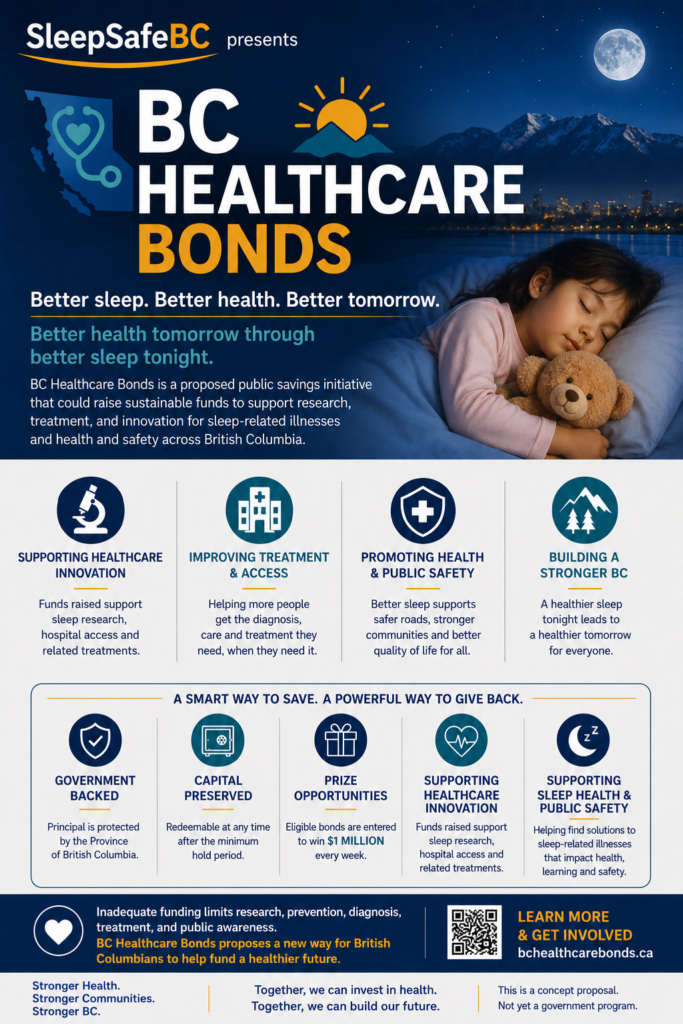
The BC Healthcare Bonds initiative was SleepSafeBC’s 2024 initiative aimed at increasing awareness of the importance of sleep while exploring sustainable funding opportunities for sleep research, education, public awareness, and the integration of sleep health into healthcare, workplace safety, and community wellbeing throughout British Columbia.
BC Healthcare Bonds is a concept proposal that explores whether a public savings initiative could help create a sustainable source of funding for healthcare priorities, involving sleep research, education, prevention, diagnosis, treatment, and innovation. The proposal is based on a simple principle: allowing British Columbians to save while helping support important investments in health and wellbeing.
By improving awareness of sleep and investing in solutions that support healthier sleep, British Columbia has an opportunity to improve health outcomes, strengthen public safety, reduce healthcare costs, and enhance quality of life for individuals, families, and communities throughout the province.
The four pillars of support – Research – Education – Prevention – Integration
https://www.facebook.com/BCHealthcareBonds
____ 2025 ________________________________________________________________________
In 2025 supported REST – Rethinking Existing Seasonal Time changes as concerns grew around Daylight Savings Time and its impact on sleep disruption, alertness, health, and public safety.
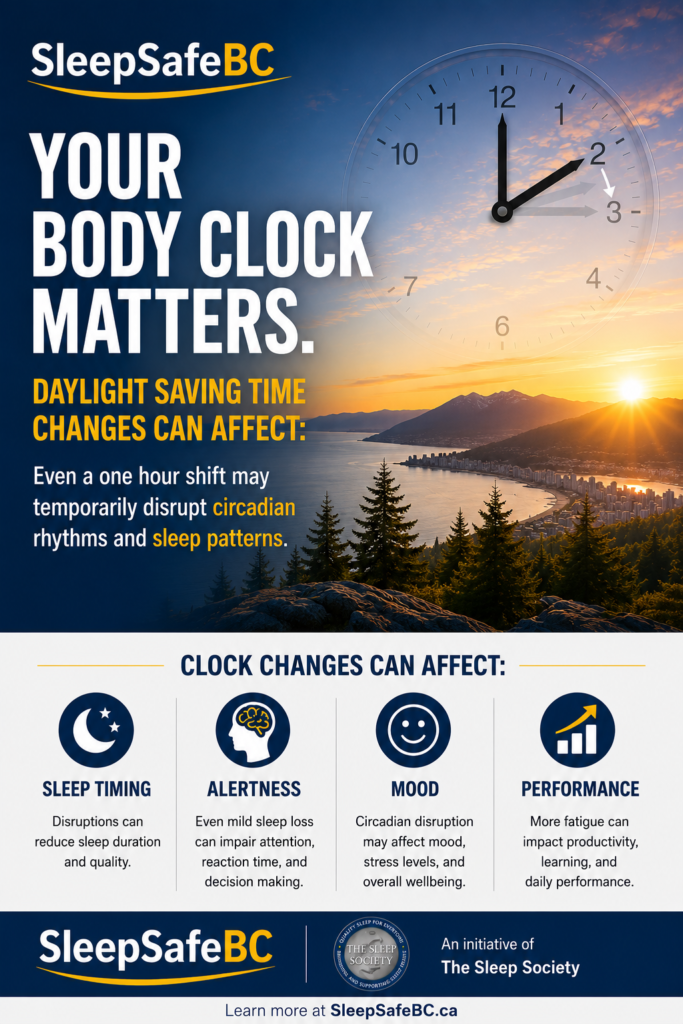
In 2025, The Sleep Society, through its SleepSafeBC program, launched the “Your Body Clock Matters” initiative to increase awareness of the impact of Daylight Saving Time on sleep, health, performance, and public safety throughout British Columbia.
While a one-hour clock change may appear minor, research has shown that even small disruptions to our circadian rhythms can affect sleep timing, alertness, mood, concentration, decision-making, and overall performance. For many individuals, the transition can result in temporary sleep loss, increased fatigue, reduced productivity, and impaired wellbeing.
The initiative sought to encourage public discussion about the importance of sleep and the role that biological timing plays in everyday life. It also highlighted growing scientific evidence that abrupt clock changes can have broader implications for health, workplace performance, learning, transportation safety, and community wellbeing.
Following increasing public awareness, professional engagement, and policy discussions, the principles underlying the initiative were ultimately recognized through legislative action, with permanent changes to seasonal time adjustment becoming law. This represented an important acknowledgment of the relationship between sleep, circadian health, and public policy.
The benefits to British Columbia are potentially far-reaching. Better alignment between social schedules and natural biological rhythms may support improved sleep health, enhanced alertness, greater workplace productivity, safer roads, improved educational performance, and a higher quality of life for many residents. While sleep is only one factor influencing health and wellbeing, it is increasingly recognized as a fundamental pillar of both.
The “Your Body Clock Matters” initiative reflected The Sleep Society’s commitment to improving public understanding of sleep and promoting evidence-based approaches to health, safety, and wellbeing throughout British Columbia.
_____ 2026 ______________________________________________________________________
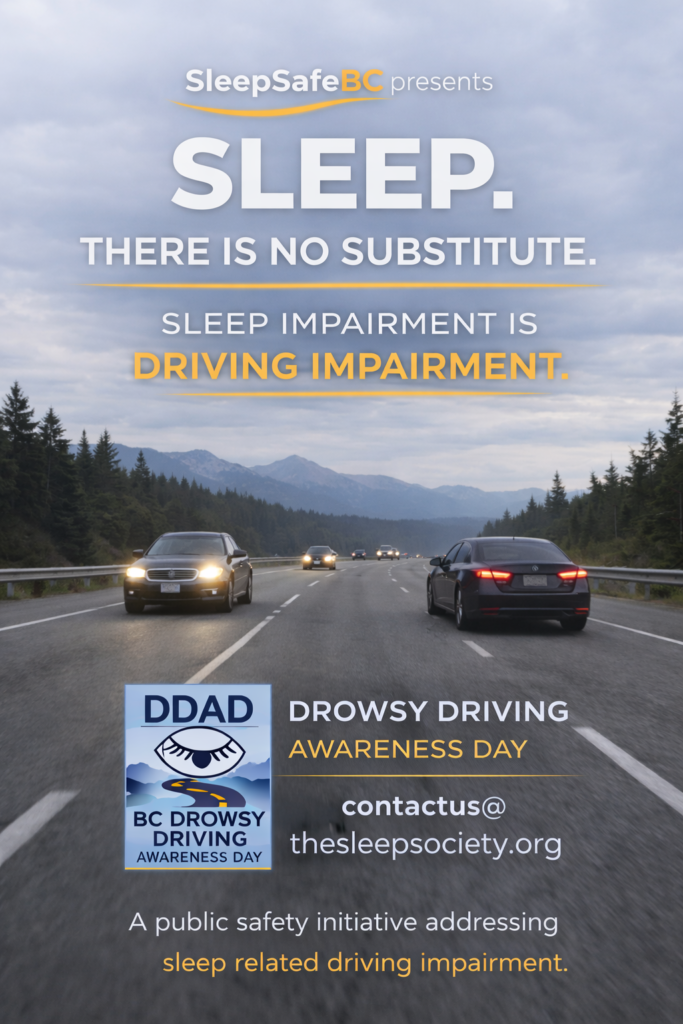
In 2026, The Sleep Society launched DDAD (Drowsy Driving Awareness Day) in recognition that Canada, unlike many other countries had little if any public awareness of the impact of sleep impairment to the risks to all road safety. Sleep impairment affects judgement, reaction time, concentration, and decision making, yet remains an unrecognized factor in road safety.
In British Columbia, TSS continues its efforts to introduce the concept of sleep impaired driving to the province’s automobile insurer, ICBC, where recognition and formal consideration of sleep related impairment remain limited.
It is estimated that between 65-70 people die tragically yet unnecessarily in sleep impaired driving. Currently ICBC have no mention of the dangers of Sleep Impairment specifically.
https://icbc.com/road-safety/crashes-happen
While the dangers of alcohol, drugs, and distracted driving are widely recognized, the impact of fatigue, sleep deprivation, and untreated sleep disorders often receives far less attention. Yet research continues to demonstrate that inadequate sleep can impair reaction time, judgement, concentration, decision making, and vehicle control. In many cases, drivers may not recognize their level of impairment until it is too late.
Drowsy driving affects people from all walks of life, including shift workers, commercial drivers, healthcare professionals, students, parents, and anyone experiencing insufficient sleep. Sleep disorders such as obstructive sleep apnea, insomnia, and other conditions can further increase the risk of fatigue-related incidents on our roads.
The purpose of Drowsy Driving Awareness Day is to encourage greater recognition of sleep-related impairment as an important public safety issue over simply “Drowsy” which covers many other aspects such as boredom, fatigue, temperature, etc. . Through education, awareness, community engagement, and professional collaboration, the initiative promotes the message that sleep – is not a luxury, it is a necessity for safe driving. By helping individuals recognize the importance of enough quality, quantity and continuity of sleep and the risks associated with driving while sleep impaired, the initiative seeks to contribute to safer roads.
Drowsy Driving Awareness Day reflects The Sleep Society’s ongoing commitment to advancing sleep health, public safety, and education throughout British Columbia.
https://www.facebook.com/Drowsydriving
_____________________________________________________________________________________________